My Father, the collector of time.
LIFESTYLE
Photography & writing by Arthur samier
Over lunch at Le Stresa in Paris, a father opens his vintage watch collection to his son, sharing the memories, rituals and quiet pleasures of keeping time.
Prada, look 15, Men's Spring Summer 2001 collection - Courtesy of Prada.com archives
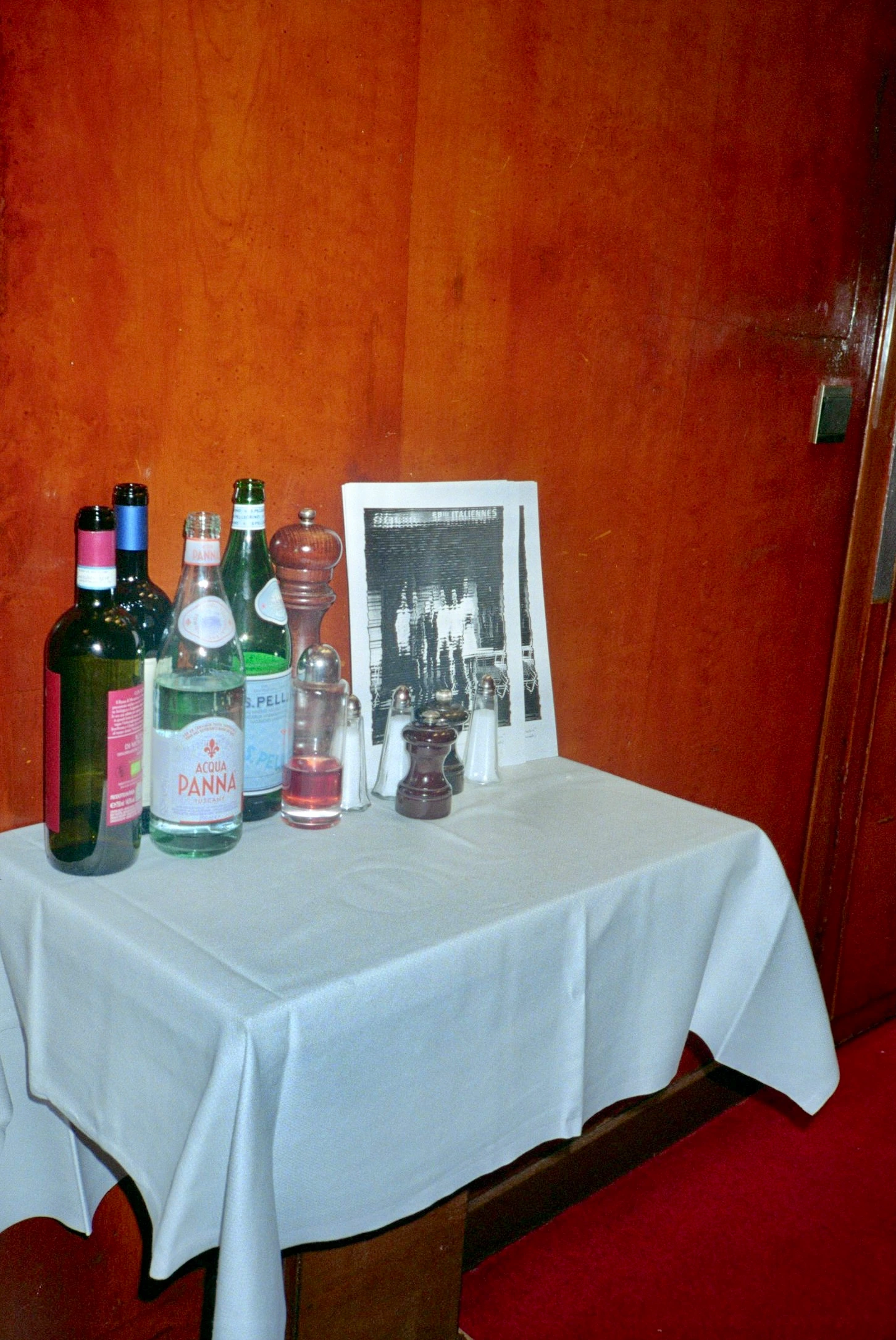
There are places where time does not stop, it settles. Le Stresa, on Rue Chambiges in Paris’s 8th arrondissement, is one of those rare settings where nothing ever changes. Everything here is wrapped in deep red: the velvet of the banquettes and chairs, the thick carpet. Crossing the threshold, you enter a Lynchian Twin Peaks scene: scarlet drapes, dim lighting, no windows to the street. The outside world vanishes. One steps inside as if entering a dressing room at the Opéra Comique, enveloped in velvet and mystery.
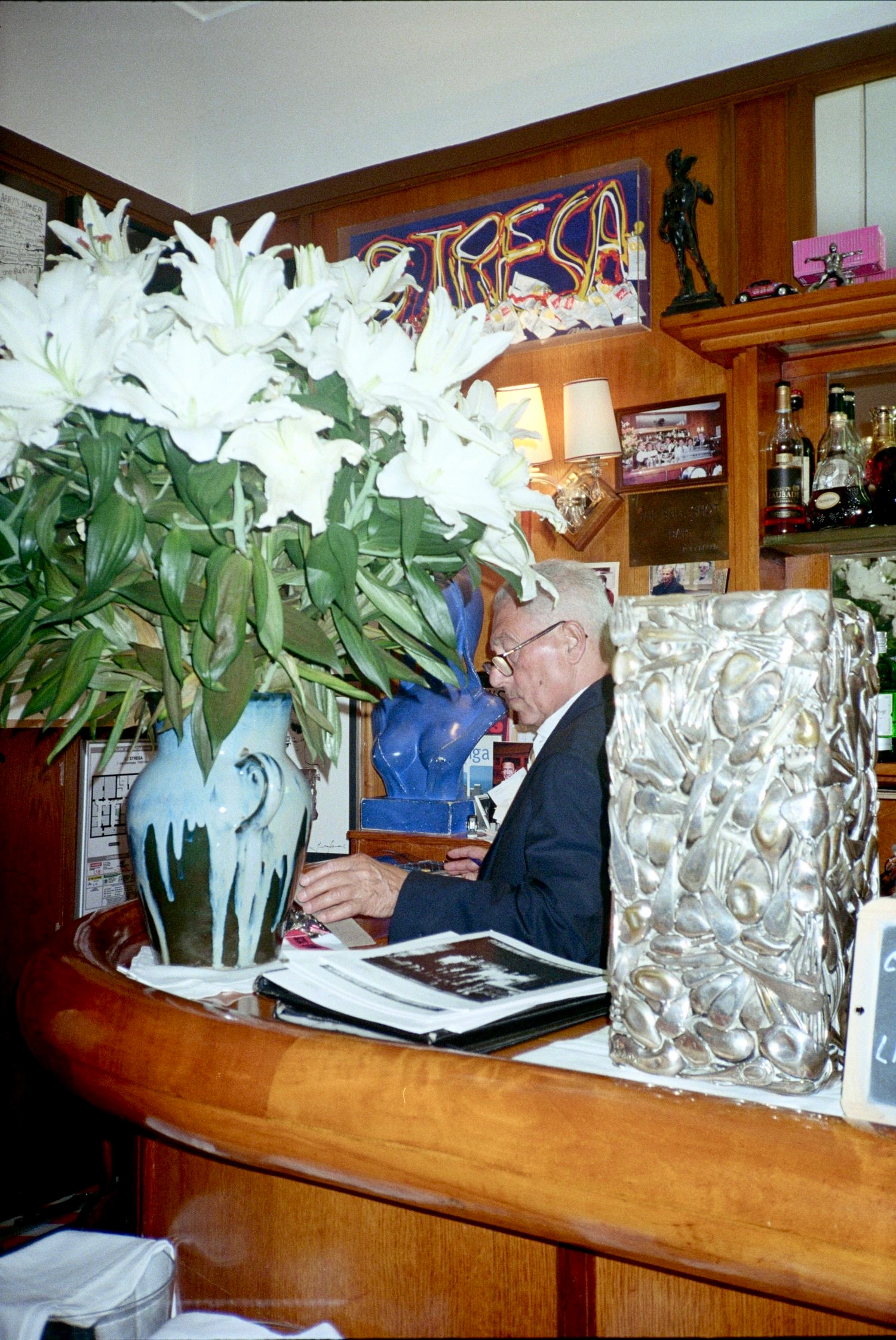
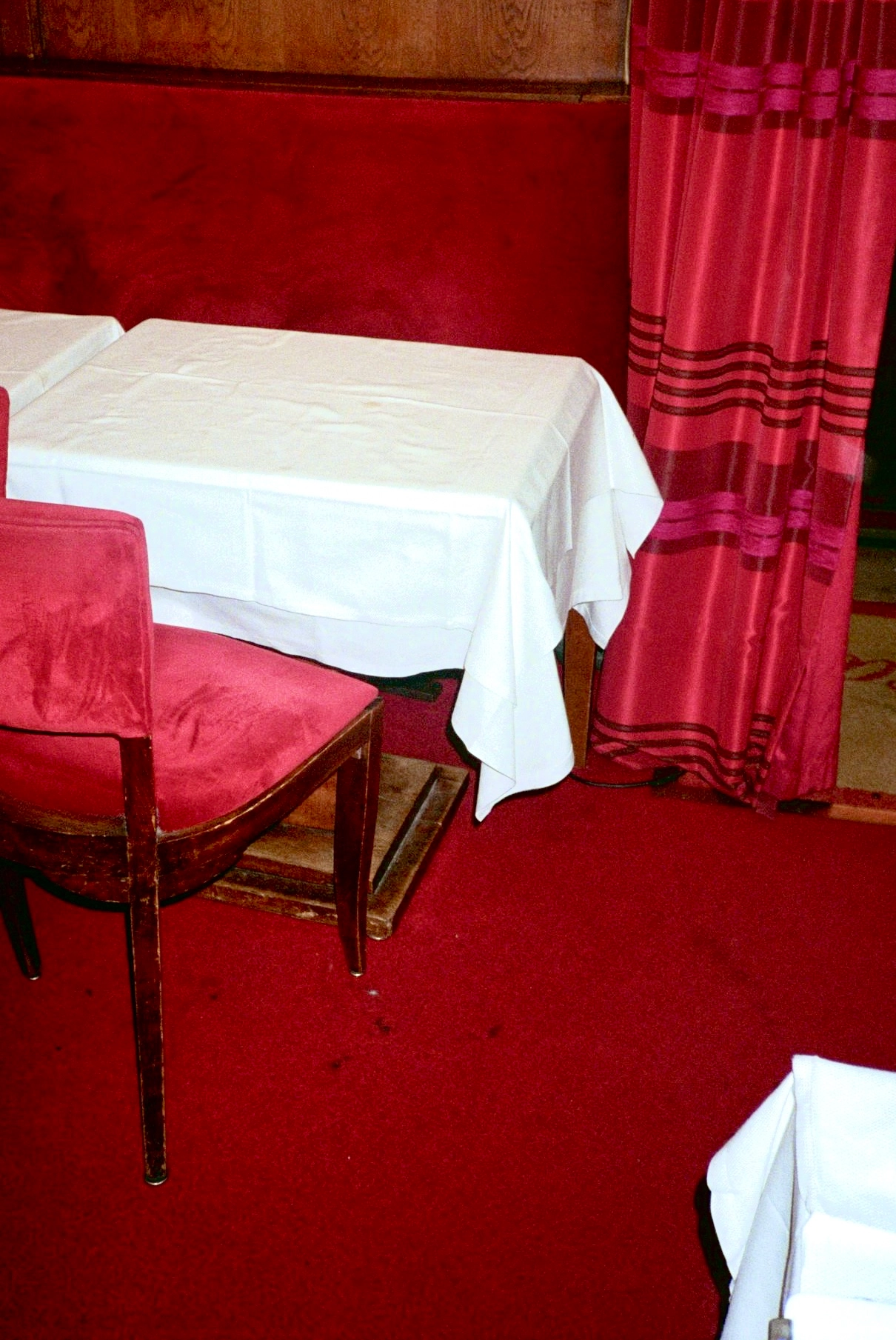
The tables form a large U, lining the walls like the boxes of an intimate stage. At the center, two white tablecloths outline the runway where conversations and glances parade. In the mirrors, everyone watches everyone else out of the corner of their eye: it’s an unspoken Italian comedy where the actors are also the audience. On the walls, the artworks remind you that Le Stresa is not just a restaurant: a compression by César reigns over the counter, twisted with silver forks; a Klein blue watches over the tables. Everything here breathes the golden age of its patrons - Belmondo, Delon, César, Buren, and others. The “Belmondo” and “Delon” pastas remain on the menu, relics of legend.
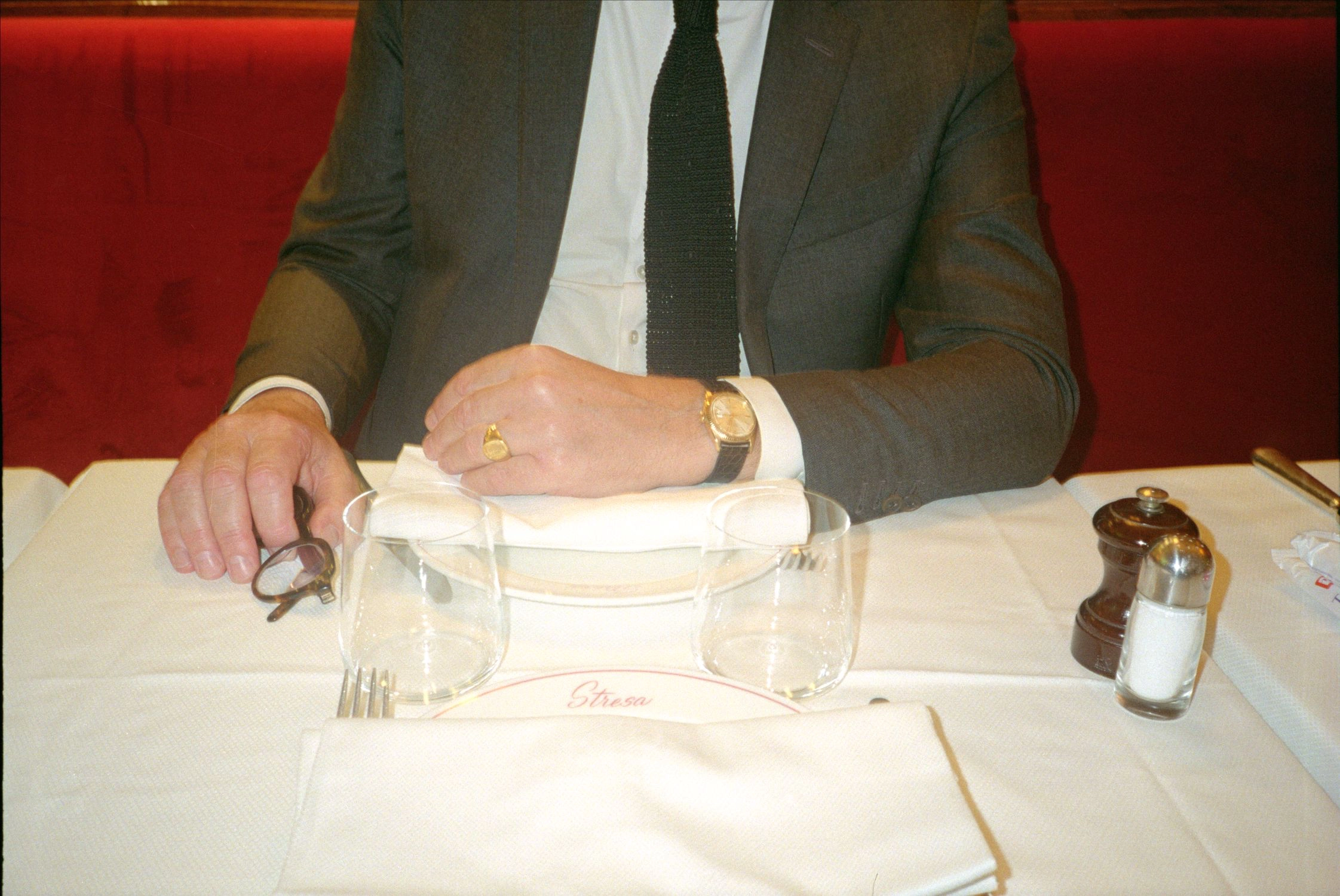
Today, I’m having lunch here with my father. He used to bring me as a child, before I could grasp the beauty of the place. He always arrived in a gray fresco suit, tie adjusted with a quick gesture. “A man is truly only one tie,” he often told me. His tie today is black—a silk knit by Arthur & Fox from the 1980s.
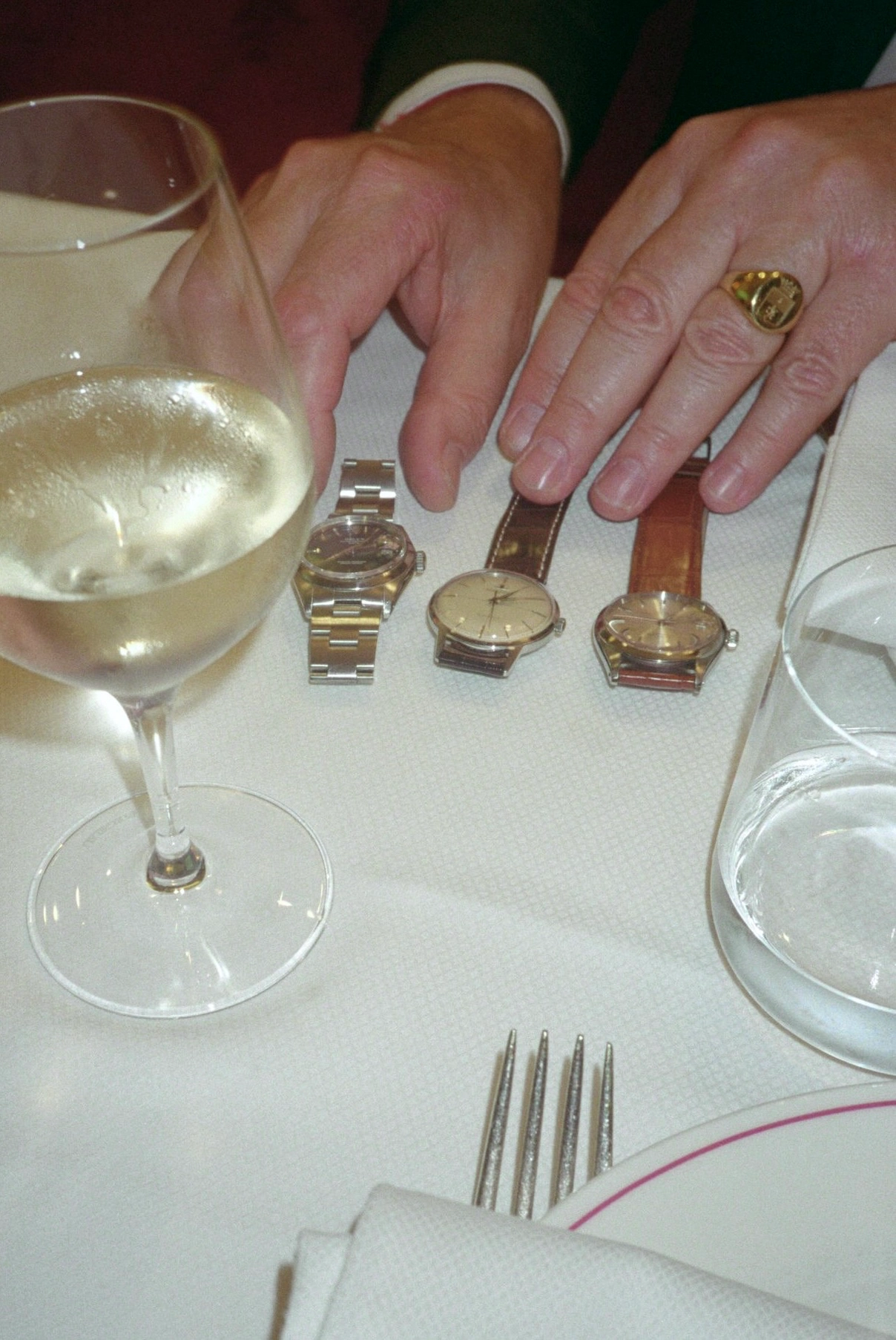
Writing about one’s father is a perilous exercise: you want to describe without dissecting, admire without becoming sentimental. It’s a two-voice conversation, where silence matters as much as words. As I question him about his watches, about time, about the very idea of collecting, his gaze sometimes drifts into a mirror—perhaps to avoid mine. At my request, he has brought part of his collection. On the white tablecloth, the watches glimmer softly: a 1960s Rolex with a patinated dial; a fine, discreet steel Jaeger-LeCoultre; a Cartier Ellipse with a black crocodile strap and yellow-gold folding clasp, which he opens with almost religious care. I look at his wrists—each watch seems to contain an era, a mood, a memory. Together, they form a mechanical biography.
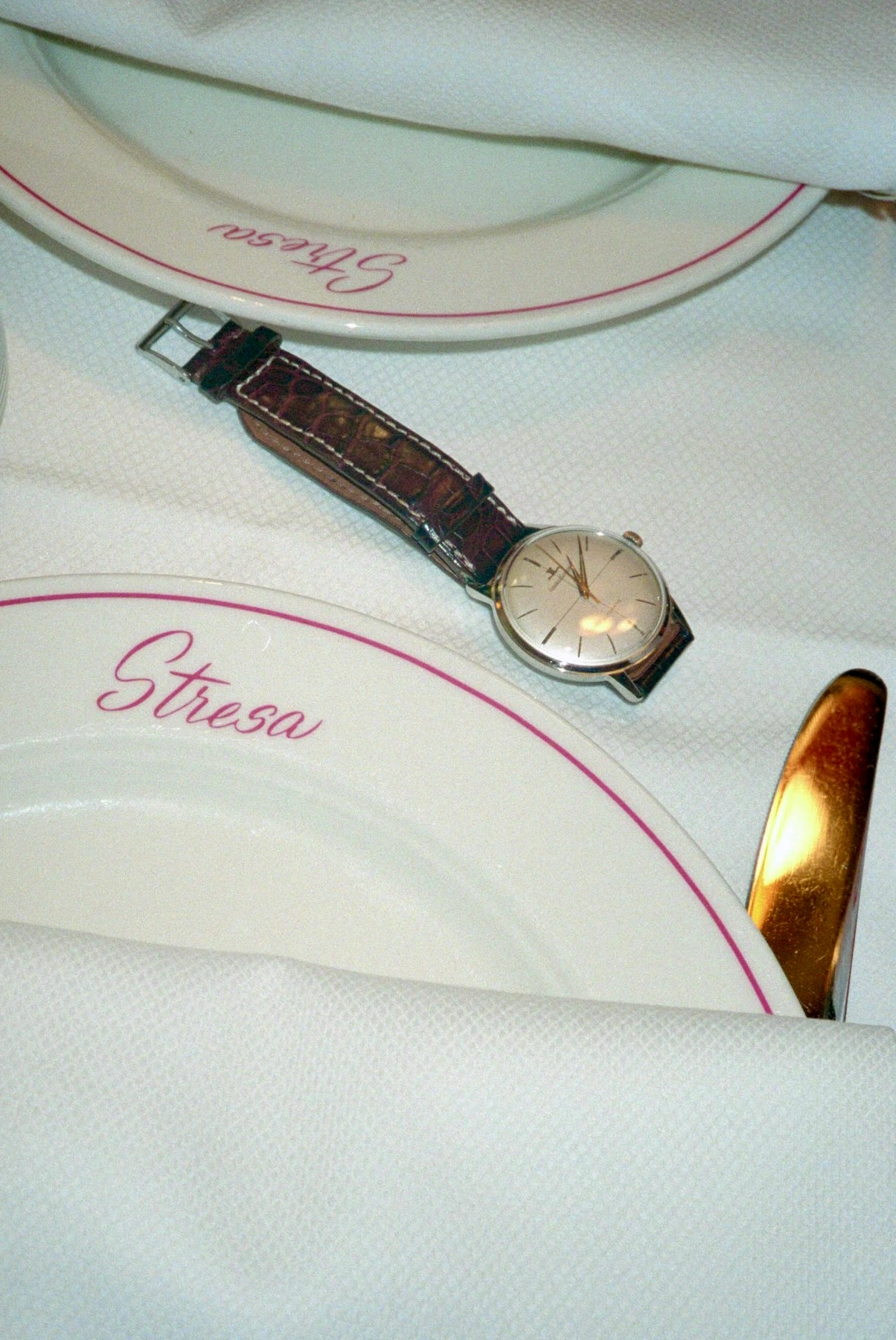
Me: You once told me you started collecting watches without even realizing it.
Him: Yes, it just happened. One purchase after another. I can’t stand batteries. A watch must live, beat, be wound. And then, little by little, you begin to recognize the beauty of a mechanism, a dial, a detail of the case. It’s like a calligraphy of time.
He slides the first watch toward me
Him: This one is a Tudor Oyster Prince Small Rose from 1963. Automatic. I bought it from Uzi, a Jewish dealer on Rue du Faubourg-Montmartre. It’s mounted on a caramel crocodile strap. My favorite detail is the old Tudor rose logo.
Next comes an 18-karat yellow gold Rolex Datejust from 1966, with a fluted crown.
Him: I waited until I was fifty to buy myself a gold Rolex. Before that, I didn’t feel legitimate. A gold Rolex is dangerous—it can easily look nouveau riche. But not this one. The gold has oxidized over time, lost its shine. It’s become matte, almost discreet.
I notice the patina, the softness of the metal.
Me: Do you wear it often?
Him: No. It’s a watch for important lunches, not for stormy days.
He then places down a 1975 steel Rolex Date, blue dial, 34 millimeters.
Him: That’s the essence of a Rolex. Nothing superfluous. I bought it five years ago. Simple, perfect, balanced. If I had to keep only one, it might be this one.
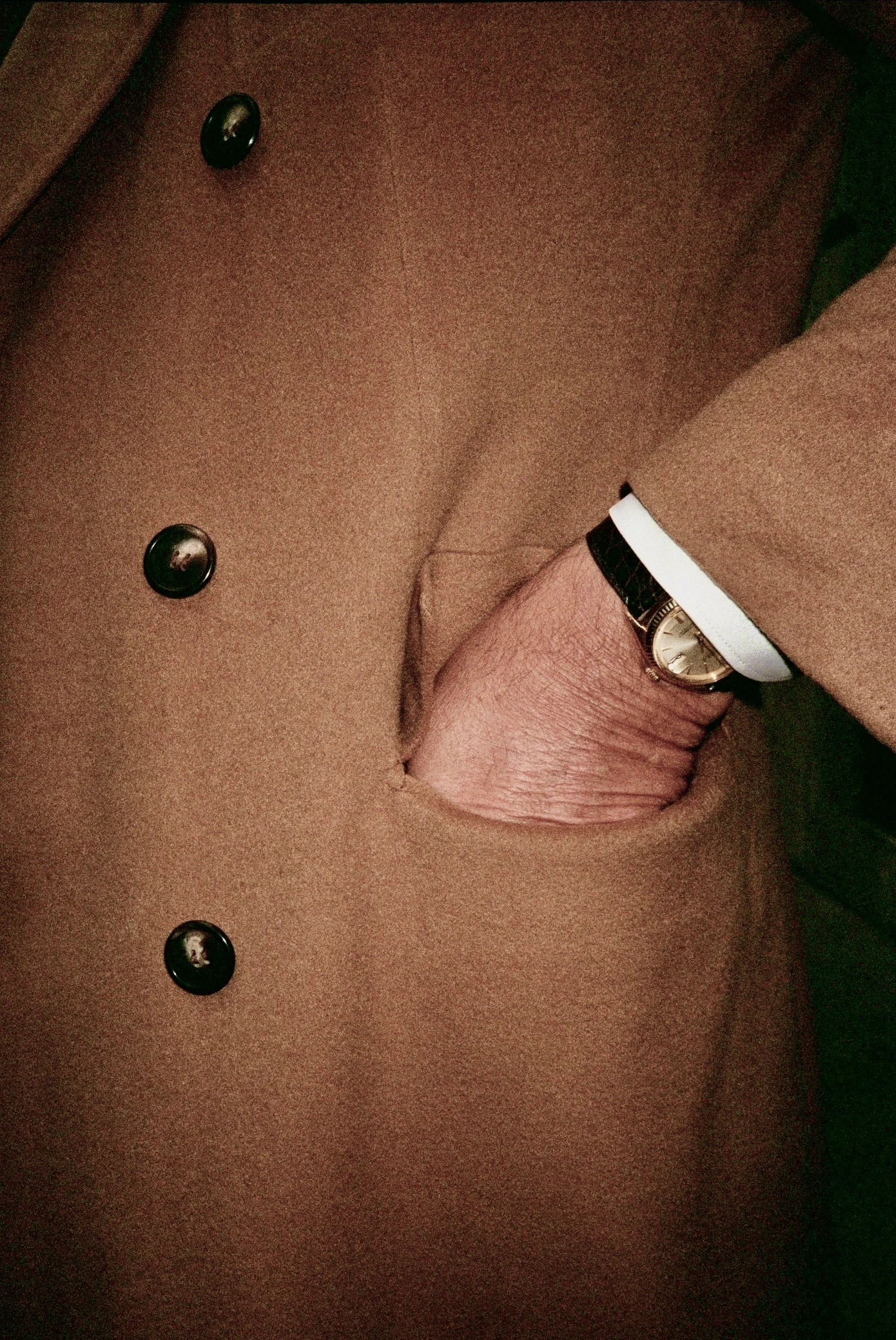
Then comes a Cartier Ellipse, 18k yellow gold, from the 1970s, with a Piaget movement.
Him: I bought it from an antique dealer near Galerie Vivienne, back when Cartiers hadn’t yet regained the value they deserve. It’s probably my favorite. The oval shape hugs the wrist with incredible grace. The dial is signed “Paris” at the bottom - that means the case and dial were made in the Rue de la Paix workshops. A true French piece.
He continues his inventory:
Him: Steel Rolex reference 1007, 1968, on leather. Manual-wind mechanical. An old-fashioned watch, like a clock you feed every morning. And finally, my steel Jaeger-LeCoultre from 1965. Eggshell dial, no date. I bought it from an old gentleman in the stairwell of a building in the 16th arrondissement. That pure, dateless dial, that simplicity - there’s nothing harder to make than a simple watch.
Me: You often say collecting isn’t the same as accumulating.
Him: Yes. It’s a relationship with time. These watches have known other wrists, other lives. I’m only keeping them for a while. I’m not an owner. I’m a custodian.
We end the conversation over a tiramisu. It’s more ritual than dessert. Here, nothing changes. Le Stresa obeys neither fashion nor seasons. One returns as one returns to a memory - to rediscover a tone, a gesture, a worldview. The tiramisu is said to be the best in Paris. It’s served without flourish, with the noble indifference of things certain of themselves.
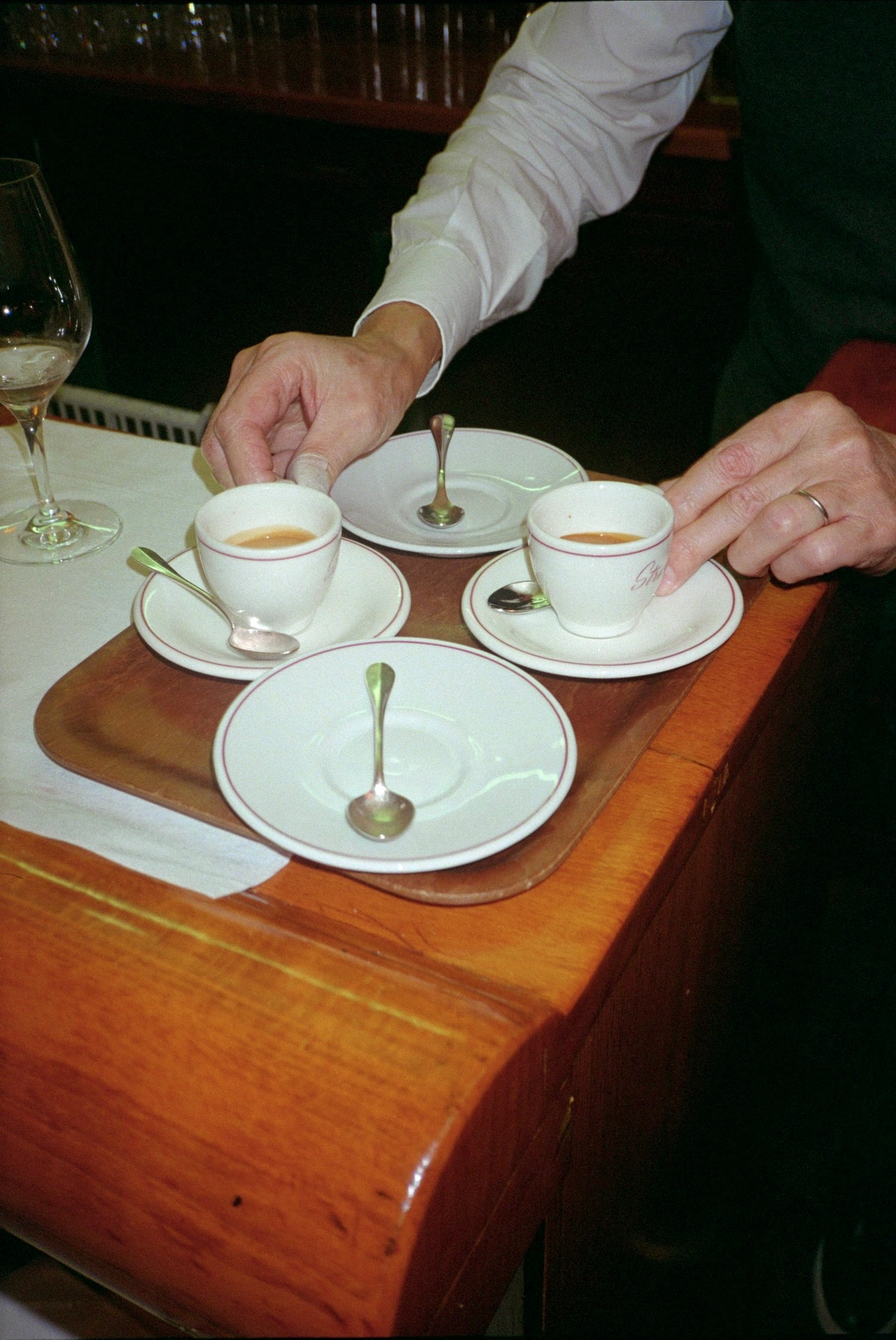
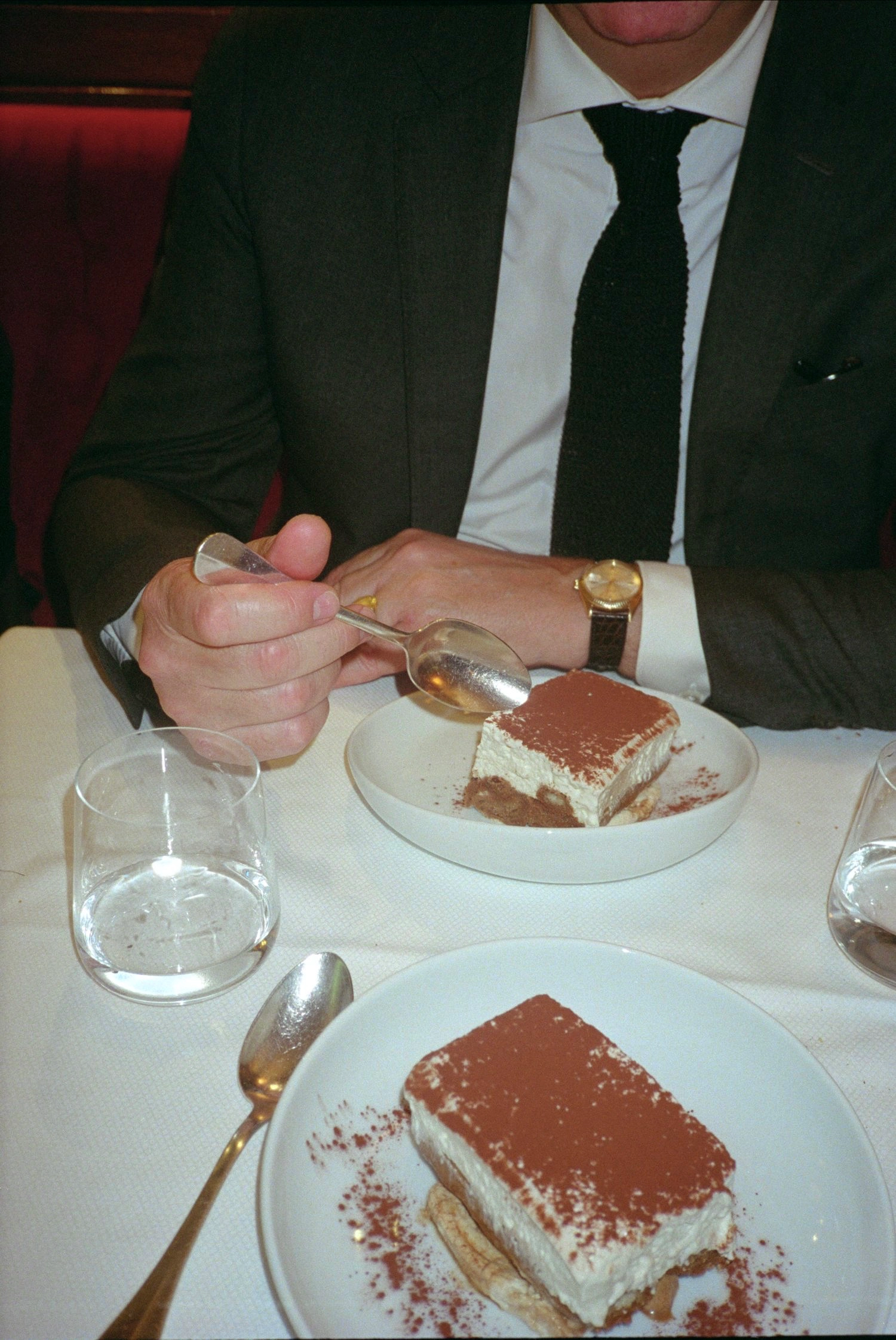
When the coffee arrives, the red of the room seems deeper still, almost carmine. My father lifts his sleeve to check the time; the hands cross, gleaming. The ticking is imperceptible, yet I know it’s there. Time hasn’t stopped - it has simply sat down with us, at our table, at Le Stresa.
SKY BLUE
Est. 2019