THE SUIT BUYING GUIDE
BUYING GUIDE
We highlight the key details and insights you need to make informed and confident choices for your next purchase.
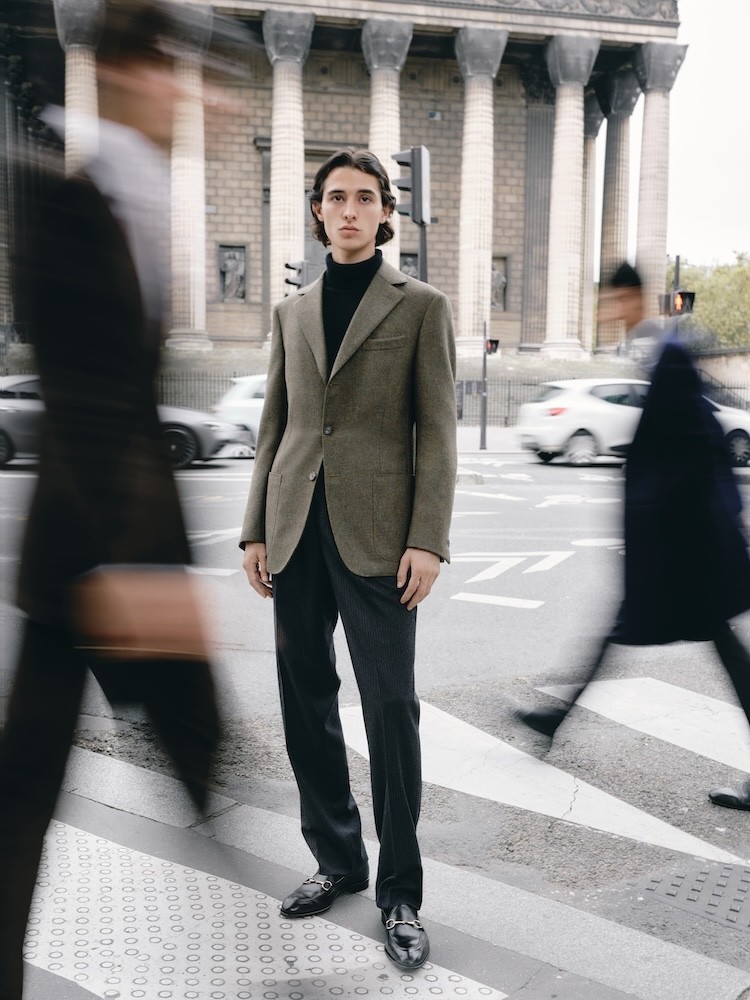
Photography by Alice Rosati
Buying a suit isn’t just a transaction — it’s a statement. A suit must move with your body, flatter your frame, and communicate confidence without screaming for attention. It’s a wardrobe investment, and like any investment, understanding the market — in this case, cuts, fabrics, and construction — is key.
Online shopping opens doors to a huge range of brands, fabrics, and custom options. The risk is obvious: photos lie, measurements are tricky, and fabrics behave differently in real life. The best approach combines precision in fit, a clear understanding of style, and an eye for construction.
Before embarking on the journey into the art of tailoring and the craft of the suit, I encourage each of you to pause and reflect on your personal style. Understand that clothing is not merely functional; it is a language, rich with tradition and coded signals, shaped by social expectations and ceremonial contexts. A suit worn to a wedding carries a different resonance than one designed for the office, and an awareness of these distinctions remains essential.
Yet, we inhabit the 21st century—a time when the rules governing suiting are no longer rigid. The contemporary suit is evolving, liberated from the prescriptive norms of past decades, such as those of the 1960s. Its purpose is no longer solely to conform, but to articulate individuality. Simply embarking on the path of bespoke tailoring places you ahead of the majority of men, signaling an attention to detail and a commitment to personal expression.
Within this framework, I maintain that one may—and should—bend the rules, selectively and thoughtfully, in pursuit of a signature style that is authentically your own. The modern suit, after all, is not merely inherited tradition; it is a canvas for contemporary identity.
Types of Suit Jackets: History, Style, and Occasions
A suit jacket is far more than just a piece of cloth — it’s a statement. Different cuts, button configurations, and silhouettes tell a story about formality, era, and personality. Knowing the differences lets you dress deliberately, not accidentally.
1. Two-Button Single-Breasted Jacket
History: The modern classic; rose to prominence in the 1920s and became standard post-WWII. Designed to flatter most body types with a natural shoulder and moderate waist suppression.
Style & Features: Two buttons, notch lapel, medium length. Works on almost any frame.
Occasions: The everyday workhorse. Business meetings, client presentations, smart casual events. A safe and versatile choice that works in most environments.
2. Three-Button Single-Breasted Jacket
History: Popular in the early 20th century, especially in American Ivy League and English country styles. The top button was originally functional for a more formal, elongated line.
Style & Features: Three buttons (sometimes with the top button optional), often higher button stance, longer jackets. Provides a taller silhouette.
Occasions: Formal business, professional environments, or for men with longer torsos. Less common today, but excellent for commanding presence in meetings or presentations.
3. One-Button Jacket
History: Emerged from evening tailcoat tradition; popularized in the 1930s-50s for sleek, fashion-forward ensembles.
Style & Features: Single button, often slimmer, higher armholes, peak or shawl lapel. Typically shorter in length.
Occasions: Formal eveningwear, cocktail parties, fashion-forward events, or stage/presentation appearances. Rarely appropriate for traditional office settings.
4. Double-Breasted Jacket
History: Roots in naval and military uniforms; became a civilian style in the 1930s-40s. Saw a revival in the 1980s with Italian tailoring, and again in modern sartorial circles.
Style & Features: Two columns of buttons (usually six, four functional), peak lapels, structured shoulders, and a more pronounced waist suppression. Creates a wide, commanding chest line.
Occasions: Formal business settings, weddings, upscale evening events, or fashion-forward city dressing. Strongly authoritative; not casual.
5. Blazer / Sports Jacket
History: The blazer originated in the 19th century as part of English boating and regatta uniforms. Sports jackets evolved from country wear for hunting, shooting, and outdoor activities.
Style & Features: Often unstructured, patch pockets, lighter fabrics, can be single or double-breasted. Buttons may be metallic (traditional blazers) or cloth-covered.
Occasions: Business casual, smart casual, semi-formal events, country outings. Can be dressed up with trousers or down with chinos/jeans.
6. Lounge Jacket / Casual Jacket
History: Derived from early 20th-century informal daywear; designed to be versatile and comfortable.
Style & Features: Less structured than a formal suit jacket, softer shoulders, natural drape, often lighter fabrics like linen or cotton.
Occasions: Casual meetings, summer events, weekend wear, city strolls, or travel. Not suitable for formal business or evening events.
7. Morning Coat / Tailcoat (Special Mention)
History: Dates back to the 19th century as formal daywear. Still worn in weddings, horse racing events, or state occasions.
Style & Features: Single-breasted front with a long tail at the back, peak lapel, fitted waist. Typically worn with waistcoat and striped trousers.
Occasions: Ultra-formal daytime events, weddings, royal or ceremonial occasions.
Key Takeaways
Everyday workhorse: Two-button single-breasted.
Tall or formal authority: Three-button or double-breasted.
Evening or fashion-forward: One-button or slim double-breasted.
Smart casual: Blazer or sports jacket.
Ultra-formal: Morning coat/tailcoat.
Tip: Always match the jacket style to both your body shape and the occasion. A double-breasted jacket on a slim, short torso can overwhelm, just as a one-button blazer may look out of place in a conservative office.
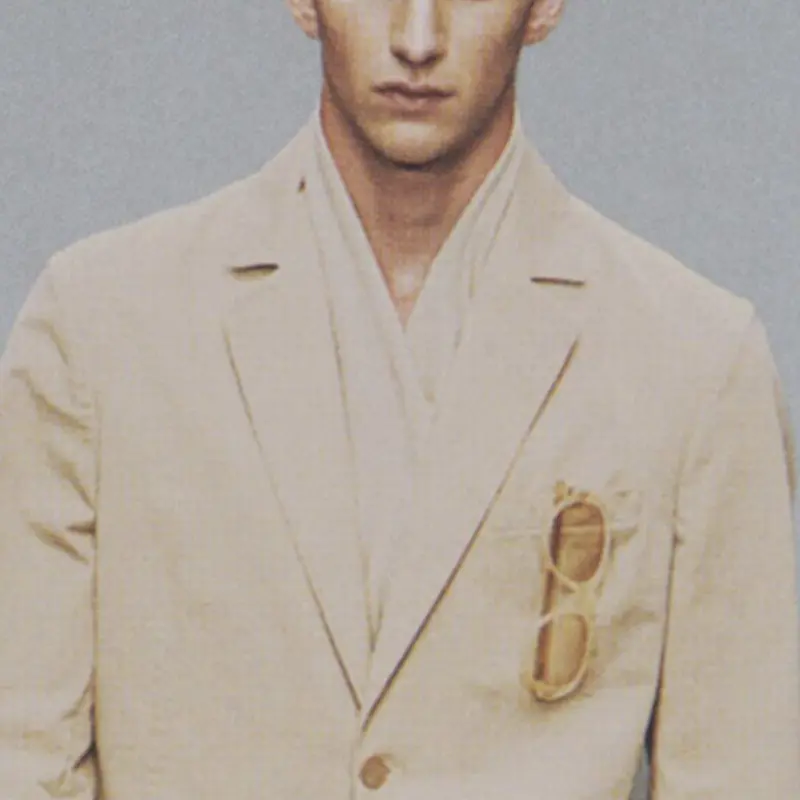
Lapels: The Detail That Defines a Jacket
Lapels are the first thing people notice on a jacket. They frame the face, define the chest, and signal both style and formality. Understanding the different types of lapels, their history, and their modern applications is essential for any man serious about tailoring.
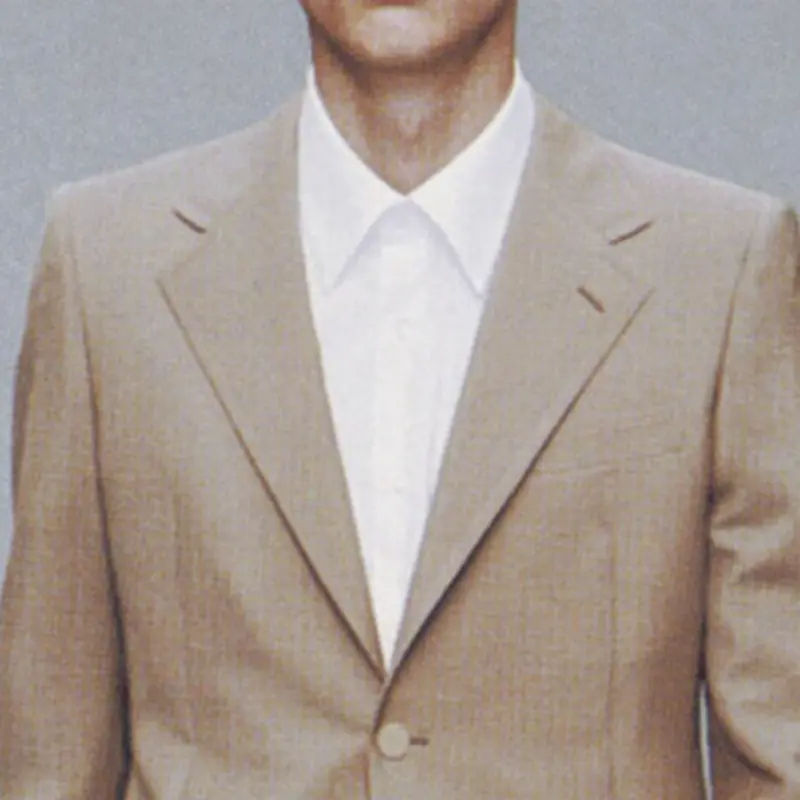
1. Notch Lapel
History: The oldest and most common lapel, dating back to the early 19th century as part of lounge and day jackets. Originally practical, it became the standard for business attire.
Style & Features: A small triangular “notch” cut where the collar meets the lapel. Typically found on single-breasted jackets, two buttons, or casual blazers.
Occasions: Everyday office wear, business meetings, smart casual events. Universally flattering, versatile, and timeless.
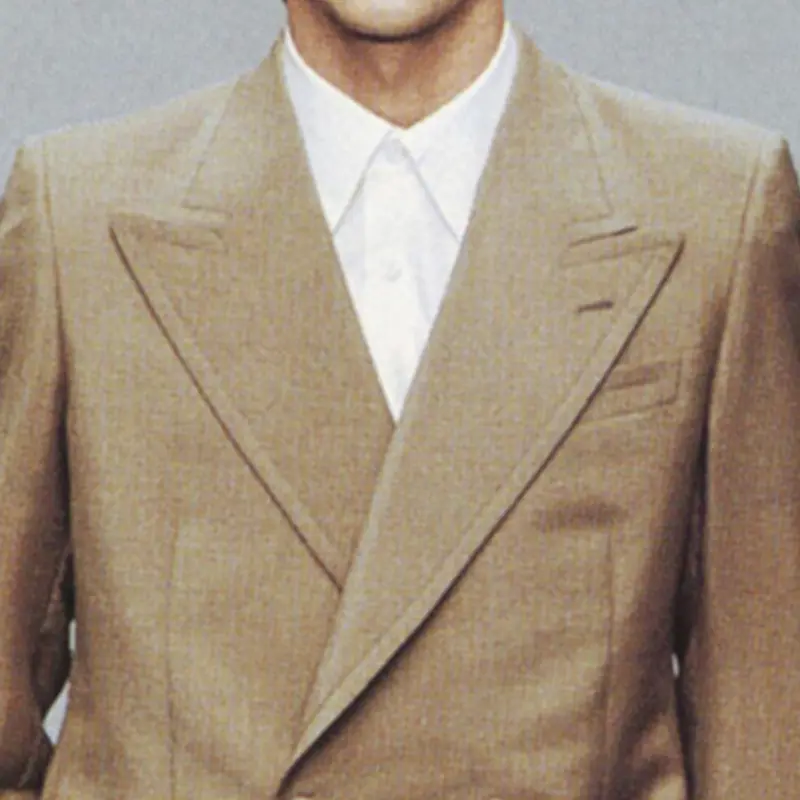
2. Peak Lapel
History: Originally part of formal morning coats and military uniforms in the 19th century; became a hallmark of Italian and British tailoring for double-breasted jackets.
Style & Features: Points of the lapel angle upward toward the shoulders, creating a V-shaped frame. Often found on double-breasted jackets or formal eveningwear.
Occasions: Double-breasted suits, formal events, weddings, black-tie adaptations of modern tailoring. Signals authority and elegance.
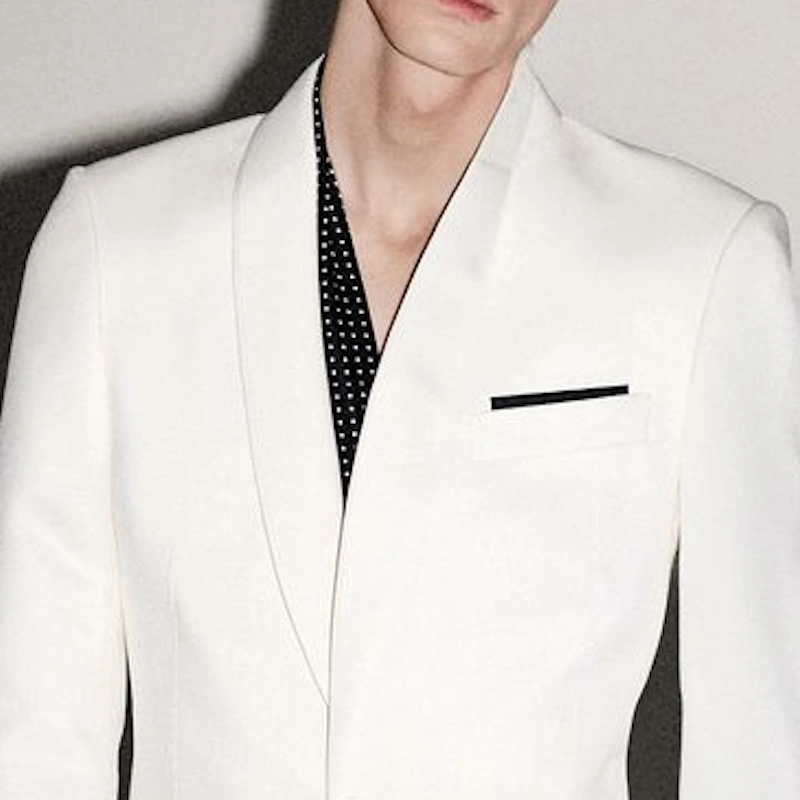
3. Shawl Lapel
History: Dating back to 19th-century evening dress, shawl lapels were popularized by tuxedos and dinner jackets. The smooth, rounded edge contrasts sharply with notch and peak styles.
Style & Features: Continuous curve with no break; minimalistic and sleek. Almost exclusively used in eveningwear or formal jackets.
Occasions: Black-tie events, tuxedos, and cocktail attire. Perfect for clean, elegant looks.
4. Slim / Skinny Lapels
History: Emerged in the 1960s during the Mod movement and popularized again by Italian fashion houses in the 2000s.
Style & Features: Narrower than traditional lapels, creating a sleek, youthful silhouette. Works best on modern, slim-cut suits.
Occasions: Fashion-forward business casual, evening events, urban tailoring. Can feel casual if paired with a classic silhouette.
5. Wide / Statement Lapels
History: Popular in the 1930s and 1940s, particularly on American suits and double-breasted jackets. Later revived by designers seeking a vintage aesthetic.
Style & Features: Wider than standard lapels; emphasizes chest and shoulder line. Often paired with double-breasted jackets for a bold, classic presence.
Occasions: Formal business settings, vintage-inspired tailoring, statement pieces. Works for men confident enough to wear something noticeable.
6. Contrasting / Decorative Lapels
History: Borrowed from military and ceremonial uniforms; sometimes seen on blazers, tuxedos, or bespoke jackets.
Style & Features: Can include satin trims, piping, or patterned edges; emphasizes the lapel as a design feature.
Occasions: Cocktail attire, creative or fashion-forward environments, eveningwear. Adds flair without compromising elegance.
Key Takeaways
Notch: Everyman, versatile, timeless.
Peak: Authority, formal, powerful.
Shawl: Elegant, evening, sleek.
Slim: Modern, youthful, urban.
Wide: Classic statement, vintage charm.
Decorative: Creative, attention-grabbing, formal flair.
Rule of thumb: Your lapel should match both your jacket type and your environment. Notches are universal; peaks elevate presence; shawls are reserved for evening elegance. Width and style signal both your era of influence and your confidence in wearing it.
Fit: The Absolute Non-Negotiable
Fit is everything. A suit can have the best fabric, the most expensive lining, and the fanciest buttons — but if it doesn’t hug your shoulders, drape correctly, and taper naturally, it fails.
Key Measurements
1. Shoulders: The most important measure; the jacket lives or dies here.
How to measure:
- Stand naturally with arms relaxed at your sides.
- Measure from the outer tip of one shoulder to the other, following the curve of your back.
- Ensure the tape passes over the shoulder blades, not around the neck.
- If possible, have someone else measure you — self-measurements often overestimate width.
2. Chest: Fullest part of the torso, arms relaxed.
How to measure:
- Stand straight but relaxed.
- Wrap the tape around the fullest part of your chest (usually just under the armpits).
- Keep arms down naturally.
- Take a breath and measure mid-expansion — not inhaled or slouched.
- Record both the circumference and the drop (difference between chest and waist).
3. Jacket Length: Should cover the seat without overwhelming your frame.
How to measure:
- Measure from the base of your neck (C7 vertebra) down to where you want the jacket to end — typically mid-seat.
- Check in a mirror; the jacket should cover your rear but not extend far past it.
4. Sleeve Length: ½ inch of shirt cuff showing is ideal.
How to measure:
- With your arms relaxed at your sides, bend the elbow slightly.
- Measure from the shoulder seam (or where the seam would sit if the jacket fits perfectly) to the wrist bone.
- Ensure about ½ inch of shirt cuff will show beyond the jacket.
5. Waist & Drop: Chest minus waist. A sharper drop creates a modern silhouette.
How to measure:
- Wrap the tape around your natural waistline, usually just above the navel.
- Keep tape snug but not tight — breathe normally.
- The difference between chest and waist (drop) typically ranges 6–8 inches for modern fits.
6. Seat & Hips: Trousers must follow your body comfortably; the break over the shoe matters.
How to measure:
- Measure around the widest part of your hips/buttocks.
- Stand naturally; don’t suck in or push out.
- Note if you prefer a slim, straight, or relaxed fit — will affect cut.
7. Trouser Waist: Comfort and proportion; trousers should sit at your natural waist or slightly below, depending on style.
How to measure:
- Wrap the tape around your natural waistline (top of the hip bones).
- Keep tape snug but breathable.
- For a mid-rise suit, this is usually 1–2 inches above the hip.
8. Inseam: Determines trouser length, break, and how they fall on your shoes.
How to measure:
- Measure from the top of the inner thigh (crotch seam) down to where you want the trouser to end (typically just touching the top of your shoe heel).
- Consider whether you want a full break, half break, or no break depending on style.
9. Neck: Essential for comfort with the shirt and tie; a tight collar kills mobility.
How to measure:
- Wrap the tape around the base of your neck, where the collar sits.
- Insert a finger under the tape for comfort.
Pro Tip: Always measure at least twice, ideally by two people. Take notes and keep them for every suit purchase — consistency is key, especially for online shopping.
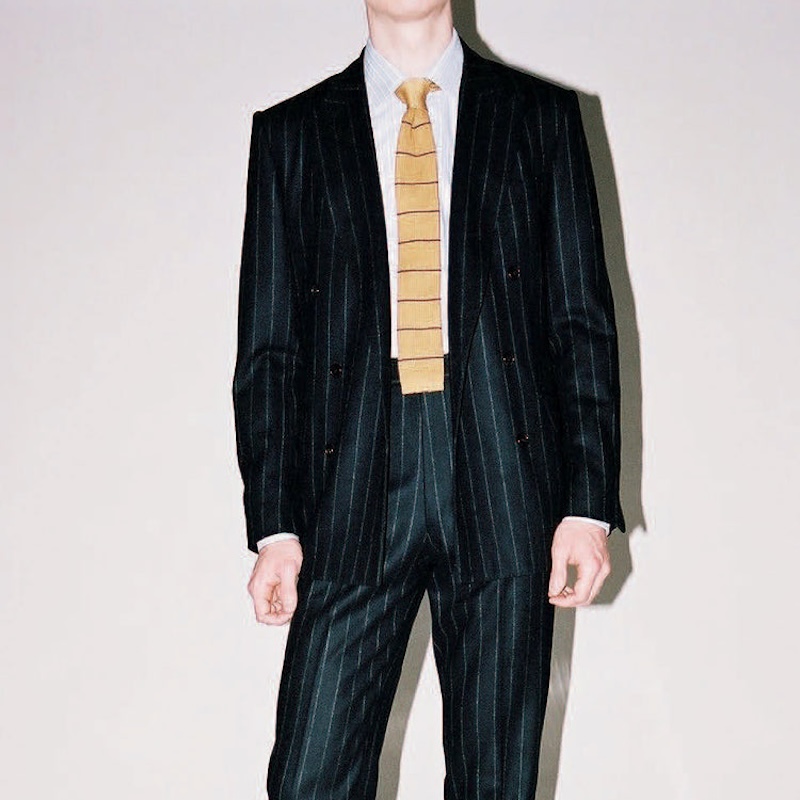
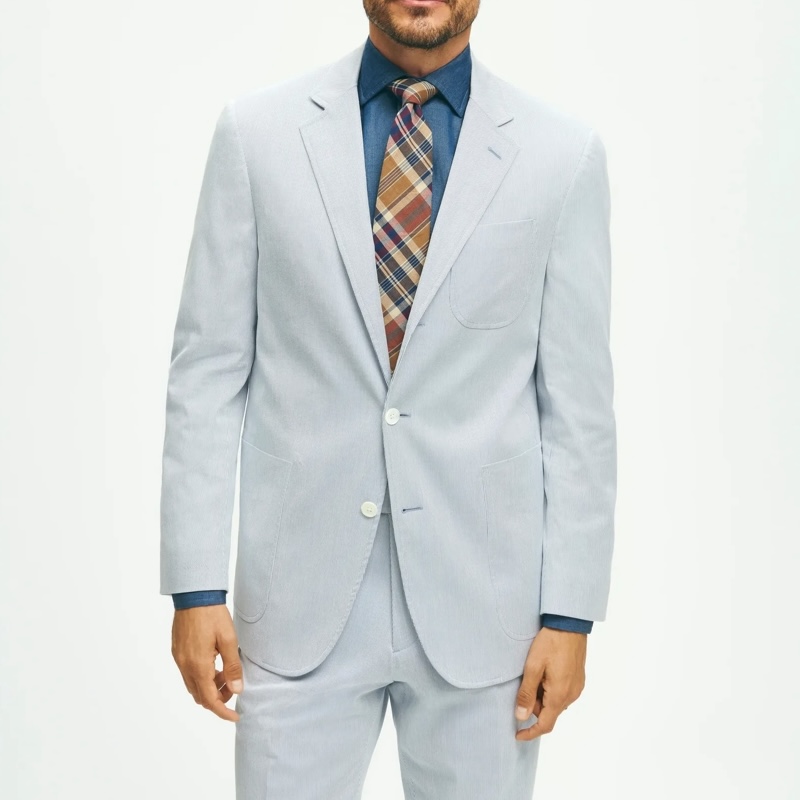
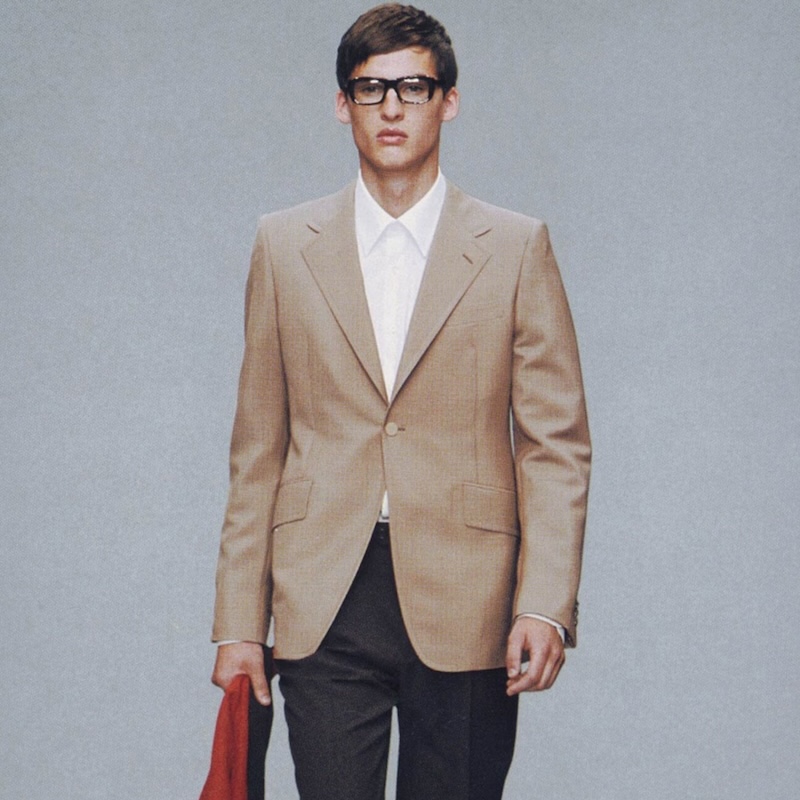
National Suit Styles: Understanding the Differences
The style and construction vary dramatically depending on origin. Knowing this helps you choose a cut that suits your frame, style, and environment.
Italian Suits
Silhouette: Relaxed, soft-shouldered, shorter jackets, high armholes.
Construction: Light canvas or half-canvas; minimal padding.
Look & Feel: Fluid, elegant, dynamic — excellent for modern, stylish urban wear.
Brands: Mariano Rubinacci, Sartoria A. Caraceni, Kiton, Brioni, Corneliani, Zegna.
Stereotype: Many menswear enthusiasts fall headlong for the Neapolitan suit, that perennial peacocking favorite whose every flourish seems to announce itself at Pitti Uomo. For those accustomed to the more restrained tailoring of northern Europe, it can feel like a sartorial cliché. But to stop there would be to do the Italian suit a disservice. In its best form, it is a study in modern elegance: relaxed shoulders, flowing waists, fabrics chosen with subtle intelligence.
The Neapolitan style can embody the classic dolce vita charm, yet it also has the capacity to evolve. With the right cuts and materials, it can take on a more contemporary, almost Prada-esque sensibility—less about conspicuous flair, more about intellectual poise and an art-driven presence. In this sense, the Italian suit is not merely decorative; it can be a vehicle for creativity, sophistication, and understated confidence.
British Suits
Silhouette: Structured shoulders, long jackets, slightly wider lapels.
Construction: Full-canvas, strong chest piece, canvas rolls down the lapel.
Look & Feel: Authoritative, classic, disciplined — perfect for formal business or traditional settings.
Brands: Edward Sexton, Turnbull & Asser, Dunhill, Huntsman, Cad & The Dandy, Gieves & Hawkes.
Stereotype: British suits have long carried a reputation for rigidity, often dismissed as stiff or difficult to wear. Yet this is a misunderstanding. While traditional construction favors a strong canvas and a well-pressed finish, a properly made British suit is designed to move with the body, not against it. Its structure—sometimes misread as inflexibility—is also what gives it such striking presence. The angular lines and deliberate tailoring can create a silhouette where none naturally exists, turning the simplest frame into something inherently stylish.
The true beauty of a British suit lies in its balance: it is a vessel for the finest bespoke craftsmanship, yet always with the wearer in mind. It frames, elevates, and respects the individual, producing a look that is simultaneously elegant, disciplined, and undeniably commanding. In essence, it is a suit that asserts itself not through flamboyance, but through thoughtful precision.
American Suits
Silhouette: Relaxed, broad-shouldered, longer jackets; boxy cuts common.
Construction: Often fused or light canvas; less shaping in the waist.
Look & Feel: Comfortable, workmanlike, adaptable — classic Ivy League or “brooks brothers” style.
Brands: Brooks Brothers, J. Mueser, Hickey Freeman, Junior's, J.Crew.
Stereotype: There’s a persistent idea that American suits are somehow “lesser” than their European counterparts, as if the more industrialized, mass-market approach to tailoring somehow erodes their value. But that misses the point entirely. The truth is, the American suit has always played a different game. Its appeal lies not in obsessive construction minutiae, but in a clarity of form and an inherent athleticism. It wears easily, it moves well, and it has a visual honesty that is immediately readable.
Think of it in terms of cultural context: the tweeds and cotton gabardines that define these suits were built to live in, to breathe, to carry a man through everyday life without ceremony. You can see the spirit of 1960s “Ivy League” ease in a grey flannel, or the slightly neurotic, cerebral charm of 1980s Woody Allen academia in a soft-shouldered houndstooth. The American suit may not obsess over every seam, but it has a timeless, understated grace—and in the right hands, an elegance that persuades without demanding attention.
French Suits
Silhouette: Slim, elegant, sometimes shorter jackets; focus on effortless sophistication.
Construction: Light canvas, delicate shoulder pads, soft drape.
Look & Feel: Chic, minimalist, fashion-forward — ideal for urban Europeans or creative industries.
Brands: Cotton Society, Swann, Cifonelli, Camps de Luca, Husbands, Charvet.
Stereotype: French suits have long carried the reputation of having little history of their own—sometimes dismissed as improvised hybrids of Italian flair and English structure, with a hint of commercial polish. There’s a kernel of truth here, particularly if one looks back to the Serge Gainsbourg-era suits of the 1980s. Yet this very hybridity is what makes French tailoring so compelling today. Positioned between the precision of England and the elegance of Italy, France has access to the finest fabrics from both worlds, and its tailors know how to combine them with subtle ingenuity.
The result is a suit that feels distinctly modern, imbued with an effortless sensuality that no other tailoring tradition seems to capture. French suits are not just garments—they are expressions of attitude, a balance of elegance, confidence, and a certain “je ne sais quoi” that remains uniquely Parisian.
Contrevrsial but we at Sky Blue believe to be important:
Swedish Suits
Silhouette: Slim but not extreme; slightly elongated jackets with narrow but not tight shoulders. Moderate waist suppression for a balanced, streamlined torso. Straight, clean lines in sleeves and trousers.
Construction: Light to medium canvas; minimal shoulder padding for a soft, natural drape. Half-canvas common; full-canvas in high-end houses. Focus on comfort and mobility.
Look & Feel: Clean, understated, functional elegance. Muted colors like navy, gray, charcoal, and earth tones dominate. Minimal detailing — subtle pick-stitching, restrained linings, small lapel buttonholes. Perfect for modern urban professionals.
Brands: Tiger of Sweden, Oscar Jacobson, J.Lindeberg, Eton, Saman Amel.
Stereotype : Swedish suits can at first glance seem almost severe in their modernity—clean lines, pared-back construction, a kind of Scandinavian restraint. Yet it is precisely through this simplicity that they achieve a quiet, effortless authority. Like the best of Swedish interior design, which marries historical reference with graceful minimalism, the tailoring is never fussy, but always considered. The result is a suit that commands respect without demanding attention, timeless in its presence and subtly confident in its understatement.
Choosing a suit style isn’t about nationality; it’s about matching cut and construction to your body, posture, and the environment where you’ll wear it. Some people may prefer the austerity and beauty of an English suit, while others may prefer the relaxed and non pretentious presence of an American suit.
Canvas Construction: The Heart of a Jacket
A suit jacket isn’t just fabric sewn together — it’s a mini-architecture of structure, support, and drape. At the center of this architecture is the canvas, the layer sandwiched between the outer fabric and the lining. Its role is deceptively simple: it shapes the chest, supports the lapels, and ensures the jacket molds naturally to your body over time.
There are three main types: fused, half-canvas, and full-canvas.
Fused Jackets
What it is: A layer of adhesive glued between fabric and lining.
Pros: Cheap, lightweight, fast to produce.
Cons: Does not move with the body, prone to bubbling, wrinkles, and short lifespan. Looks cheap after a few wears.
Full-Canvas Jackets
What it is: A layer of horsehair (or a horsehair-wool blend) canvas extends from shoulder to hem, shaping the chest and lapels entirely.
Pros: Best structure, perfect drape, long-term durability, molds to your body over time.
Cons: Heavy, expensive, and less forgiving if your frame doesn’t suit a very structured style. Can feel stiff or boxy on lighter Italian-inspired silhouettes.
Half-Canvas Jackets
What it is: Canvas only covers the upper chest and lapels, while the lower part of the jacket relies on stitching or interfacing.
Pros: Lighter and more flexible than full-canvas — moves better with the body.
Preserves lapel roll and chest structure where it matters most.
Often more comfortable for modern, slimmer cuts or for warmer climates.
Less expensive than full-canvas, while still offering many benefits.
Cons: Slightly less structure at the waist and lower jacket; may not mold as perfectly over decades.
When half-canvas is better than full-canvas:
Slim, modern jackets: Italian or French styles with higher armholes and soft shoulders don’t need heavy structure — a half-canvas allows mobility without sacrificing lapel shape.
Comfort-focused wearers: For suits worn long hours, half-canvas gives you shape without stiffness.
Hot climates or travel: Full-canvas can feel heavy; half-canvas is lighter, breathable, and less prone to creasing.
Budget-conscious quality: Half-canvas hits a sweet spot — the jacket rolls beautifully at the chest and lapels, but costs less than full-canvas.
Rule of thumb: Full-canvas is king for traditional, structured, British-style jackets or for long-term investment pieces. Half-canvas is ideal for modern, versatile suits that combine elegance, comfort, and adaptability.
Common Suit Errors to Watch Out For
Even experienced buyers can make subtle but critical mistakes when choosing a suit. A suit isn’t just about shoulders and sleeves — the details matter, and small flaws can ruin an otherwise expensive investment. Here’s what to look for:
1. Shoulder Fit
The jacket lives or dies in the shoulders. If they extend beyond your natural shoulder line, the jacket looks sloppy and boxy. If they’re too narrow, you’ll get pulling and wrinkling across the chest. Shoulder pads should sit naturally — not stand proud or slope unnaturally.
2. Chest and Button Pull
When buttoned, the jacket should lie flat.
Avoid:
Triangle gaps above the trousers: This is the small inverted triangle that sometimes appears just above the waistband when the jacket is buttoned. It signals that the jacket is too tight in the chest or waist. A subtle triangle can be acceptable on slim cuts, but a pronounced one ruins the silhouette.
Pulling at buttons: If the fabric stretches across the midsection, the suit looks strained and unpolished.
3. Puckering and Twisting
Puckering along seams or lapels is a red flag. It often comes from poor construction or a mismatched fit at stress points (shoulders, chest, or back).
Twist at the lapel or placket: When buttoned, the jacket should sit symmetrically. Twisting means the jacket isn’t sitting naturally on your body and will only worsen over time.
4. Jacket Length
The bottom of the jacket should cover the seat comfortably without looking oversized. Too long, and it overwhelms a modern frame; too short, and it looks juvenile.
5. Sleeve Length
Proper sleeve length shows about ½ inch of shirt cuff. Too short, and it’s jarring; too long, and the wrist disappears, leaving the jacket looking sloppy.
6. Trouser Fit and Break
Trousers should follow your body without excess tightness or sagging.
Check the break over the shoe: no break looks sharp, one break is classic, excessive break is sloppy.
Waist should sit naturally; too tight causes muffin-top wrinkles, too loose causes sagging and belt stress.
7. Lapel Roll and Canvas Interaction
Lapels should roll smoothly from the collar down to the button stance.
Excessive stiffness, flattening, or “ripples” in the chest indicate poor canvas construction.
8. Fabric Weight and Seasonal Appropriateness
Lightweight flannels in winter, heavy wools in summer — mismatched fabric weight ruins both drape and comfort.
Stretchy, synthetic fabrics may look okay at first but will lose shape quickly.
Rule of thumb: A jacket that fits the shoulders, chest, and waist correctly will almost always look better than one that is larger or smaller everywhere else. Pay attention to the triangle above the trousers, the lapel roll, and puckering along stress points — they are the true litmus tests of fit and construction.
The Essential Suit Wardrobe Every Man Should Own
If you’re serious about style, your wardrobe needs purposeful, versatile, and striking pieces. Here’s the arsenal every man should consider:
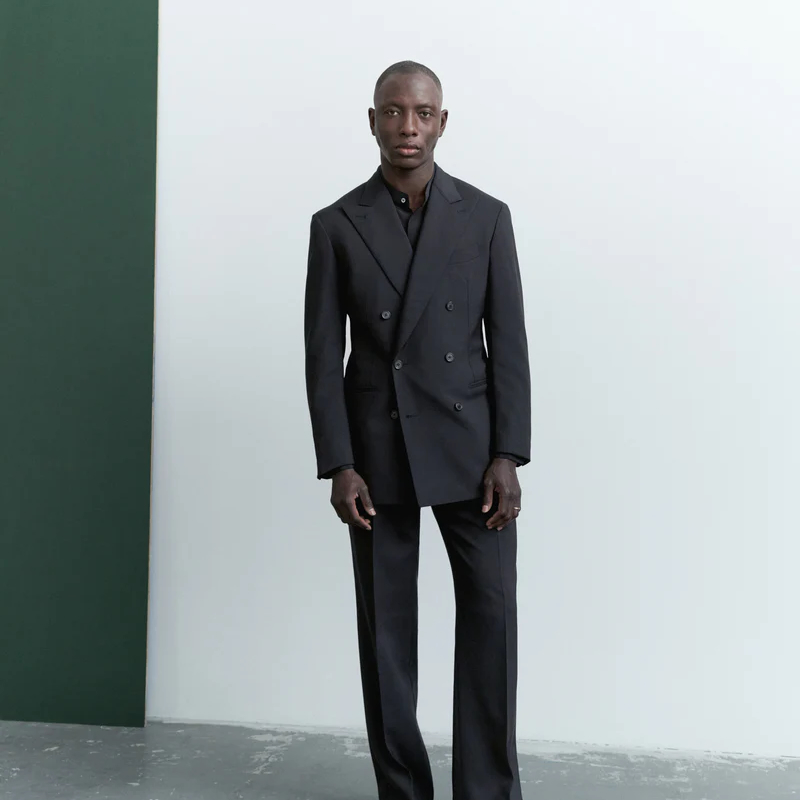
Black Double-Breasted Fresco Suit – The ultimate go-anywhere piece. Effortless for evening events, dinners, or cocktails, but just as commanding in a boardroom where authority matters. Clean, sleek, and instantly powerful.
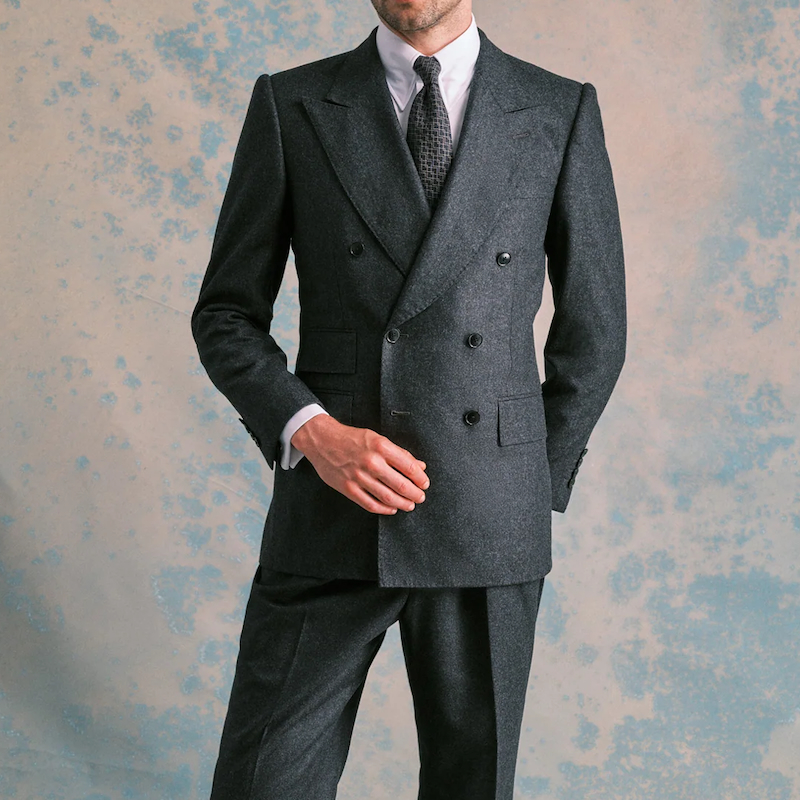
Grey Flannel Double-Breasted Suit – Contemporary yet timeless. Wear it as a full suit for classic impact, or mix and match: grey jacket with black trousers, or grey trousers with a black jacket. It balances nostalgia with modern business sensibility, giving you style versatility.
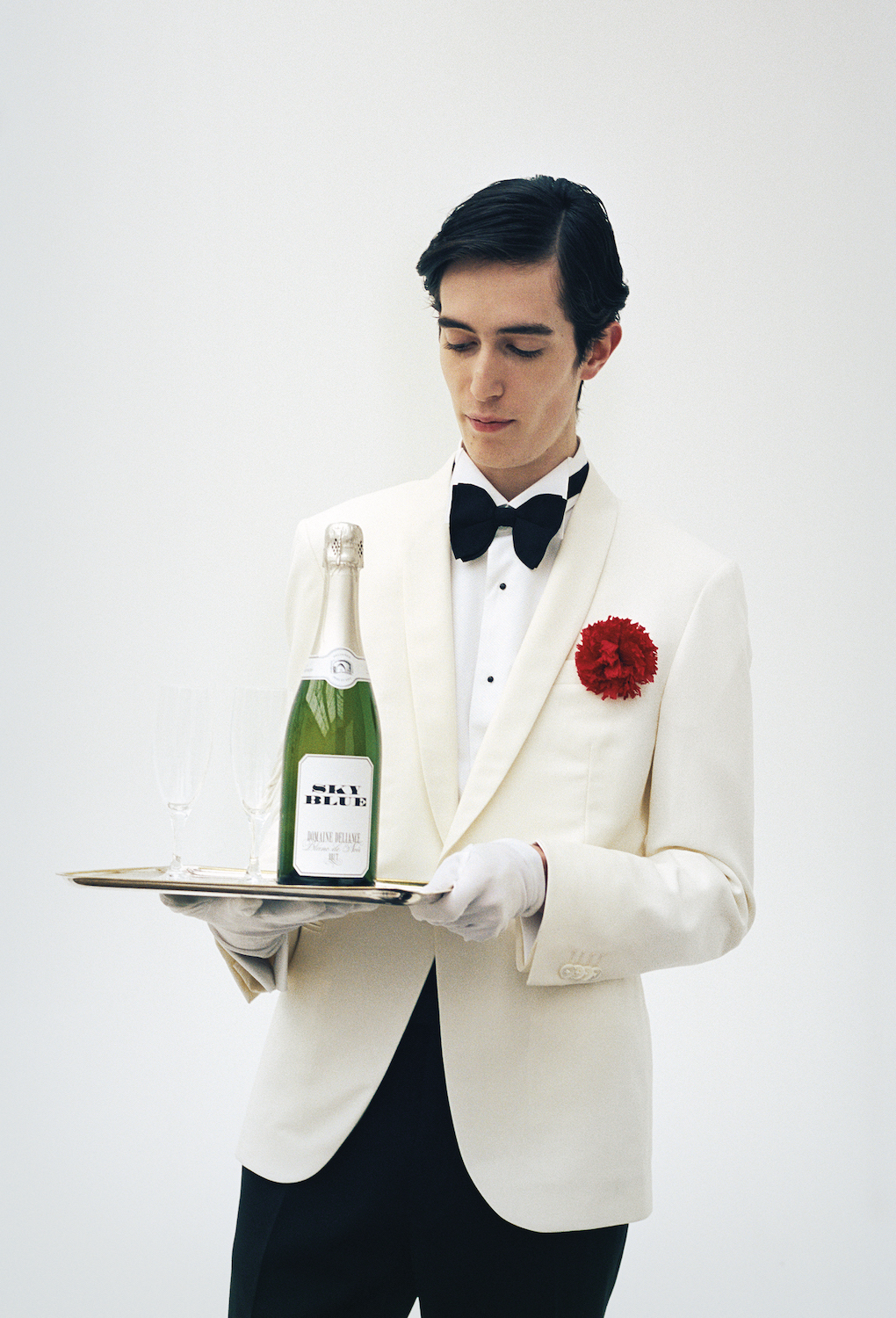
Ivory Double-Breasted Suit – The showstopper. Perfect for cocktails, events, or any situation where attention matters. Its Art Deco-inspired elegance harks back to a refined era, making it a memorable statement while remaining tasteful.
Navy Double-Breasted Blazer with Gold Buttons – Think English monarchy and timeless elegance. This jacket can swing from formal to relaxed: pair it with tailored trousers for refinement or white/ivory trousers for a summer casual vibe. A must-have nod to heritage style.
Black Three-Button Roll Suit – Your everyday workhorse. Sophisticated yet adaptable, it can be elevated with a pocket square or made modern with the right shirt and accessories. Reliable, versatile, and classic.
Tweed Two-Button Suit – For grounded, nostalgic charm. Perfect for family gatherings, countryside weekends, or any setting where warmth, texture, and authenticity matter. A tactile nod to heritage and nature.
Black or Dark Grey Cashmere Mao-Collar Suit – Sleek, intellectual, and effortlessly stylish. Throw it over a simple knit and wool trousers, and it elevates a basic outfit into something cerebral and refined. Adds structure, warmth, and a modern edge to your wardrobe.
Now that you understand the different jacket types, cuts, and occasions, and errors to look out for, choosing your next suit becomes far less random. Think deliberately. Maybe you only wear black cashmere in the winter — decide if it’s double-breasted for impact or single-buttoned for versatility, depending on where you’ll actually be wearing it. Or perhaps you’re drawn to 1980s-inspired silhouettes, with slightly broader shoulders for presence, but not so much that you look sloppy. Your style should reflect you, but it should also respect the people around you. Personal doesn’t mean careless; elegance always requires thought.
SKY BLUE
Est. 2019