Cartier
The Tank
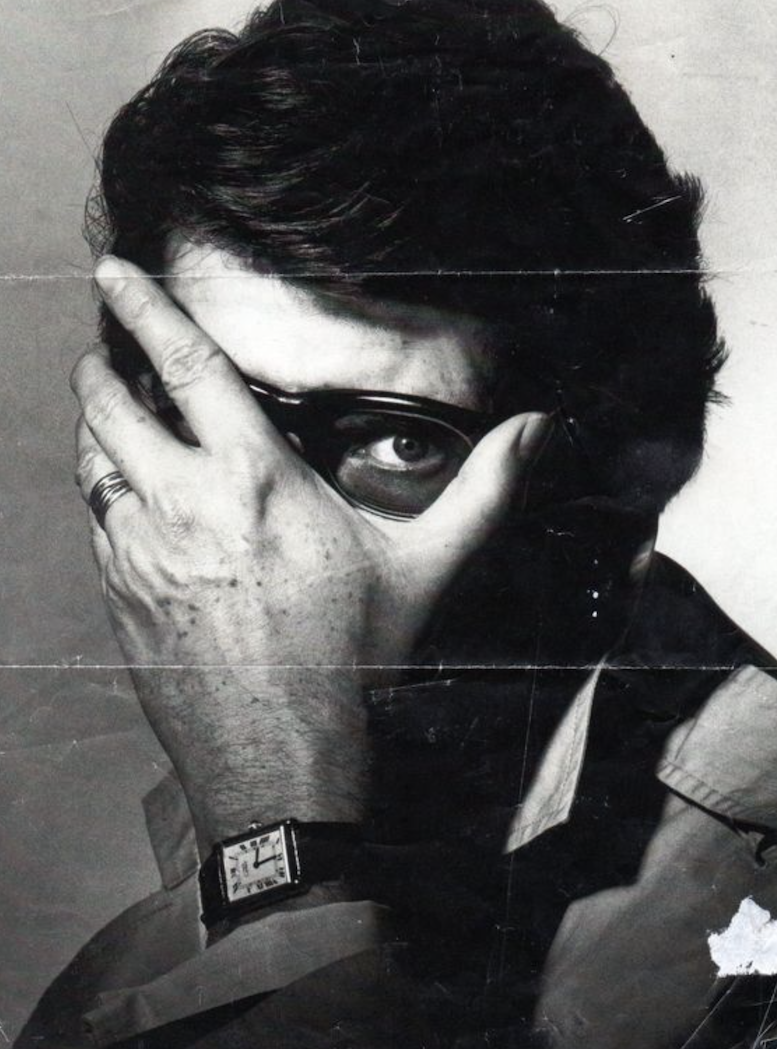
Yves Saint Laurent seen here wearing a Tank watch from Cartier. Photography by Irving Penn, Paris, 1983
Written by james v. thomas
The history of the watch that eternally dazzles us.
Perhaps the most regal of timekeepers, Cartier’s Tank is not merely a watch but a declaration of order, proportion, and authority. Its beauty lies in restraint: a disciplined geometry softened by an elegant strap (preferably lizard), and a dial that communicates with absolute clarity. This is simplicity with pedigree.
Louis Cartier conceived the Tank amid the clatter and chaos of the First World War, inspired—unexpectedly—by the Renault tanks advancing across the Western Front. From instruments of destruction came an object of enduring refinement. The parallel brancards, discreetly concealing the lugs that attach the strap, were an act of design intelligence so radical it rendered ornament unnecessary.
It is this ingenuity—so modern, so resolved—that has allowed the Tank to slip effortlessly through decades, immune to fashion’s tantrums. Worn by artists, intellectuals, and arbiters of taste, it remains an emblem of cultivated confidence. An object many covet, yes—but more importantly, one that continues to remind us that true elegance resists trends and remains relevant.
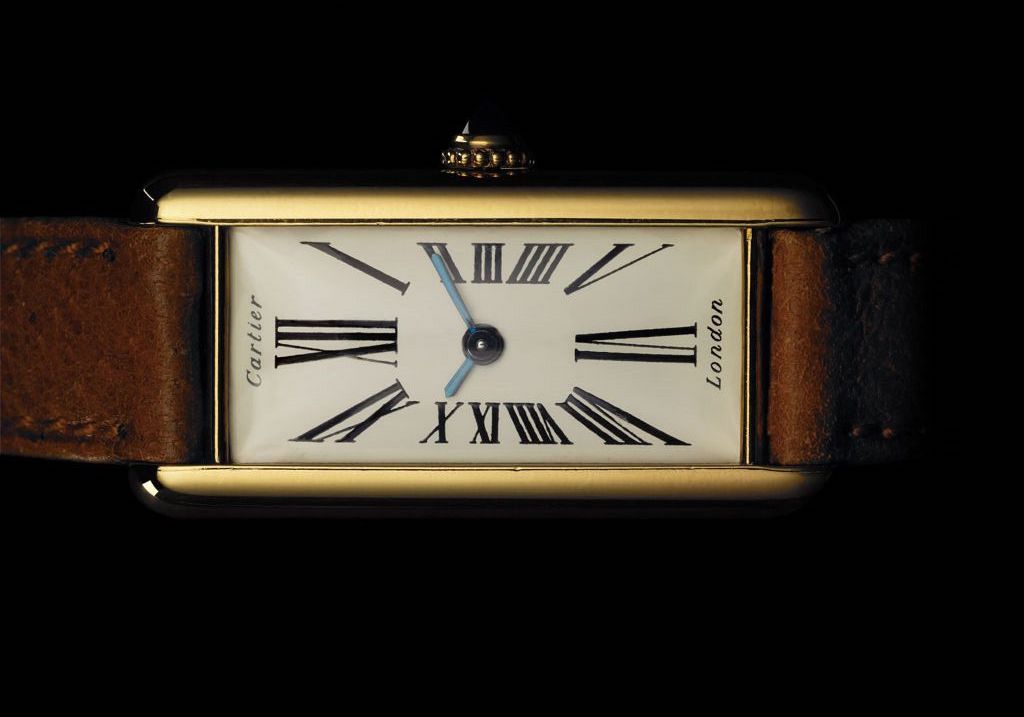
The Tank Allongé
There is not one Tank, but many—each a reflection of Cartier’s restless intelligence and its refusal to allow an icon to stagnate. From the architectural severity of the Tank Normale to the ornamental exoticism of the Tank Chinoise; from the graphic audacity of the Tank à Guichets to the elongated elegance of the Tank Allongée, the design has been endlessly reinterpreted without ever losing its identity.
The vocabulary expands further: the sculptural Tank Obus, the linear Forme Baguette, the pragmatic Étanche, the mechanically ingenious Basculante, the rare Mono-Poussoir, and the aristocratic Tank Louis Cartier. Later came the geographic variations—the elongated confidence of the Tank Américaine, the structured modernity of the Tank Française, the curved assertion of the Tank Anglaise.
Even the lesser-known models, today revived under the banner of the Collection Privée Cartier Paris, confirm what the Tank has always represented: not repetition, but evolution—proof that a great design can multiply endlessly without surrendering its authority.
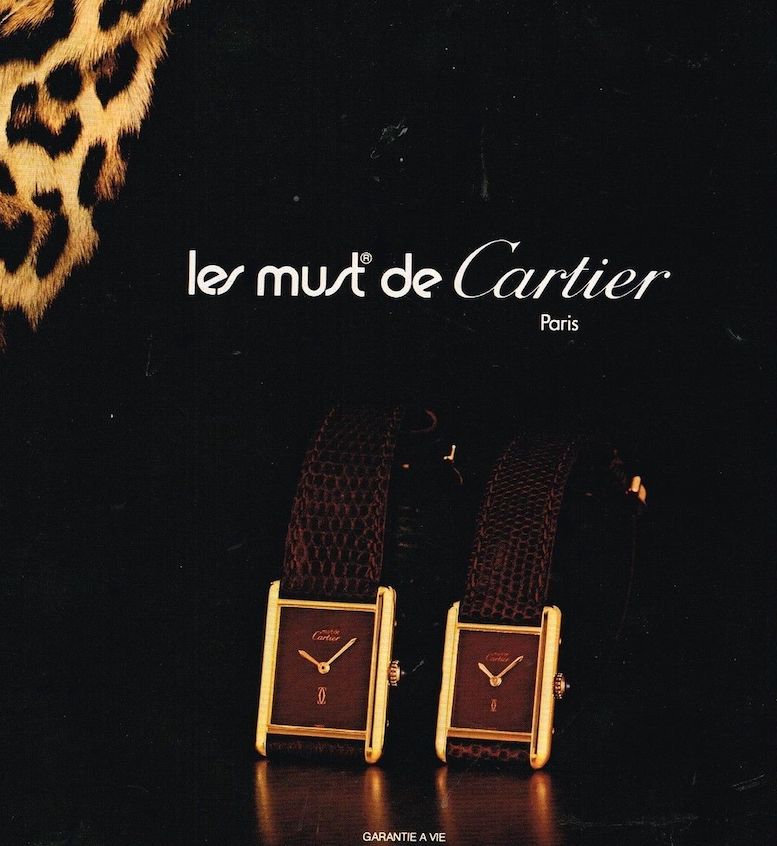
Original advertising for Must de Cartier watches.
The 1970s ushered in a profound shift in luxury: a moment when exclusivity loosened its grip and great houses began to consider a wider audience. From Halston’s streamlined glamour to fashion’s broader rethinking of access, Cartier, too, entered this new terrain with a decisive move—the creation of Les Must de Cartier.
These were not merely watches but a universe of objects: lighters, scarves, tableware, and accessories that carried the Cartier signature beyond the confines of the jewel case. Within this expanded vision, the Must de Cartier watch emerged in 1977 as a strategic reinterpretation of the Tank—an effort to preserve its iconic design while recalibrating its price.
The timing was critical. The rise of digital technology was unsettling the Swiss watch industry, and Cartier, like its peers, felt the pressure. Yet devotion to the Tank’s form endured. The solution lay in material ingenuity: silver cases finished in gold plating—vermeil—allowed the house to maintain visual richness while making the watch more attainable. To this, designers added twelve distinct dial variations, ensuring variety without diluting identity.
The earliest Must de Cartier watches were powered by hand-wound mechanical ETA calibers, anchoring them firmly in watchmaking tradition. Quartz models followed in 1982, reflecting both technological change and Cartier’s willingness to adapt—proof that even an icon must evolve to survive.
SKY BLUE
Est. 2019