Construction
TAILORING & CRAFT
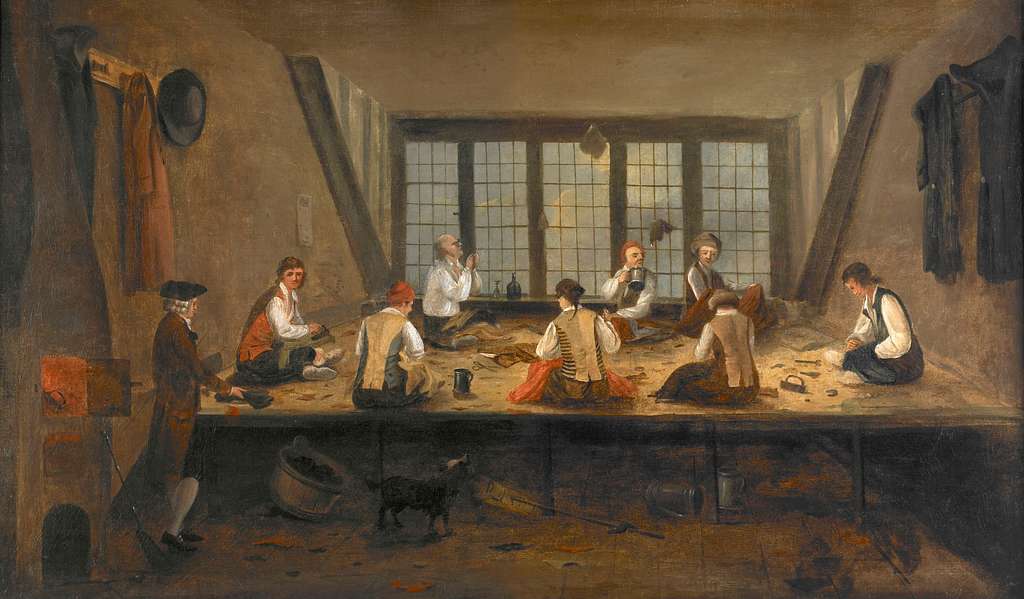
Inside a tailor's shop, 18th century
written by James V. Thomas
Exploring the various stages of suit construction - from internal canvassing to finishing details.
Suit construction is the foundation of true tailoring, and understanding its stages reveals why a well-made garment looks, feels, and lasts the way it does. This guide explores the full process—from internal canvassing and structural layers to stitching techniques, shaping, and the final finishing details that define quality. Whether you’re a tailoring enthusiast or simply curious about what sets exceptional suits apart, this overview breaks down each step with clarity and craftsmanship in mind.
Guide to Suit Construction: From Canvas to Finishing
Understanding suit construction is essential to recognizing true quality in tailoring. Behind every elegant silhouette lies a meticulous process involving engineering, craftsmanship, and hand-finishing techniques refined over generations. This guide breaks down the major stages of constructing a suit, explaining how each detail influences fit, durability, and overall sophistication.
1. Pattern Drafting and Cutting
Every suit begins with precise pattern drafting. Whether made-to-measure or fully bespoke, the pattern sets the garment’s proportions and balance.
Measurements are translated into a two-dimensional pattern.
Cloth is laid and cut following grain direction to ensure clean drape.
Components are marked for canvassing, pockets, and seams.
This stage shapes the garment before a single stitch is sewn.
2. Internal Canvassing
The canvas is the hidden architecture of a suit.
Full canvas: Extends from shoulder to hem; offers the best structure, natural movement, and longevity.
Half canvas: Supports the chest and lapels; a balance of quality and cost.
Floating canvas layers: Horsehair, wool, and linen blends that mold to the wearer over time.
A properly inserted canvas ensures the jacket retains its shape, responds to the body, and ages beautifully.
3. Building the Chest and Lapels
This is where the suit starts to take form.
Chest pieces add volume and stability.
Lapels are pad-stitched by hand in high-end tailoring to achieve natural roll and tension.
Shoulder shaping (roped, natural, extended) is built through layered wadding and careful pressing.
These details influence the suit’s personality and the way it frames the wearer.
4. Assembly and Stitching
The assembly process combines machine precision with artisanal handwork.
Side seams, darts, and vents define the silhouette.
Sleeves are set using ease stitching for clean, rounded shape.
Trousers are built with structured waistbands, reinforced pockets, and aligned pleats.
High-end tailoring relies heavily on hand-sewn operations that allow flexibility, repairability, and superior drape.
5. Fitting Stages
Quality construction includes iterative refinement.
Basted fitting: The suit is temporarily assembled to check posture, balance, and proportions.
Forward fitting: Sleeve pitch, hem lengths, and body shaping are adjusted.
Final fitting: Fine-tuning for comfort and clean lines.
Each fitting ensures the garment matches the wearer’s physique and movement.
6. Finishing Details
Finishing is where craftsmanship becomes visible.
Hand-sewn buttonholes with delicate gimp cord.
Pick stitching along lapels and edges for subtle texture.
Pressed shaping that sculpts the garment into its final form.
Bias-bound seams or clean linings that reflect interior refinement.
These small touches signal exceptional tailoring and create a garment that feels luxurious in every detail.
7. Final Pressing and Quality Control
Before delivery, the suit undergoes a meticulous shaping and inspection process.
Final pressing gives the garment its crisp lines and sculpted profile.
Quality checks ensure symmetry, clean stitching, balanced shoulders, and smooth drape.
The result is a suit that performs elegantly from the moment it is worn.
8. Things to Watch Out For
Not all suits are created equal, and understanding potential pitfalls can help you recognize true quality. Watch for machine-heavy construction with little handwork, as it can compromise fit and drape over time. Cheap or glued canvases may make the jacket feel stiff or lose shape quickly. Pay attention to uneven stitching, misaligned patterns, or poorly set sleeves, which are signs of rushed or low-quality tailoring. Even small details like buttonhole finishing, lapel roll, and seam alignment reveal the level of craftsmanship. Being aware of these factors ensures you choose a suit that will look, feel, and last as it should.
9. Recognizing Handmade Quality
Handmade, fully tailored suits carry subtle signs of craftsmanship that distinguish them from mass-produced garments. Look for slight irregularities in hand-stitching, which indicate careful attention rather than machine uniformity. Pad-stitched lapels should roll naturally and feel soft to the touch, while hand-sewn buttonholes are often slightly raised and textured, showing skill and precision. The canvas inside the jacket will mold to the body over time, giving a natural shape and flexibility impossible to replicate with glued or fused construction. Even details like hand-set sleeves, individually sewn linings, and pick stitching along edges reveal the dedication and artistry of a tailor. These nuances create a suit that not only fits impeccably but also exudes character and refinement.
SKY BLUE
Est. 2019